

Research · Discovery · Impact
RedefiningBreast CancerThrough Early Biology
Breast cancer in young women is not simply earlier onset—it is biologically distinct and demands a fundamentally new approach to research.
By focusing on the earliest biological drivers of disease, our science aims to enable risk prediction, prevention, and earlier intervention—before cancer becomes aggressive.
The Institute
The Young Women’s Breast Cancer Research Institute (YWBCRI) is a global, collaborative research institute advancing breast cancer research upstream—before tumors form.
Through a human-centered, systems-level approach focused on early breast biology and metabolic drivers, we translate early biological insights into prevention and early interception.
About the InstituteA Different Premise
Why a New Approach?
For too long, breast cancer in young women has been studied using models built for older populations. This has enabled progress—but breakthroughs for young women remain limited.
Breast cancer in young women is often more aggressive, less predictable, and diagnosed later. Yet most research frameworks—built for postmenopausal disease—begin only after tumors are established, limiting progress in prediction, prevention, and early interception for women under 40. A different approach is needed—one that begins with the biology that precedes disease.
Our Vantage Point
We Move Breast Cancer Research Upstream
A new approach to early biology—focused on discovering and targeting the earliest drivers of disease.
We study the biological changes that occur before cancer is visible—when risk and disease trajectory are still being shaped, and when biology may still be reversible.
Explore our science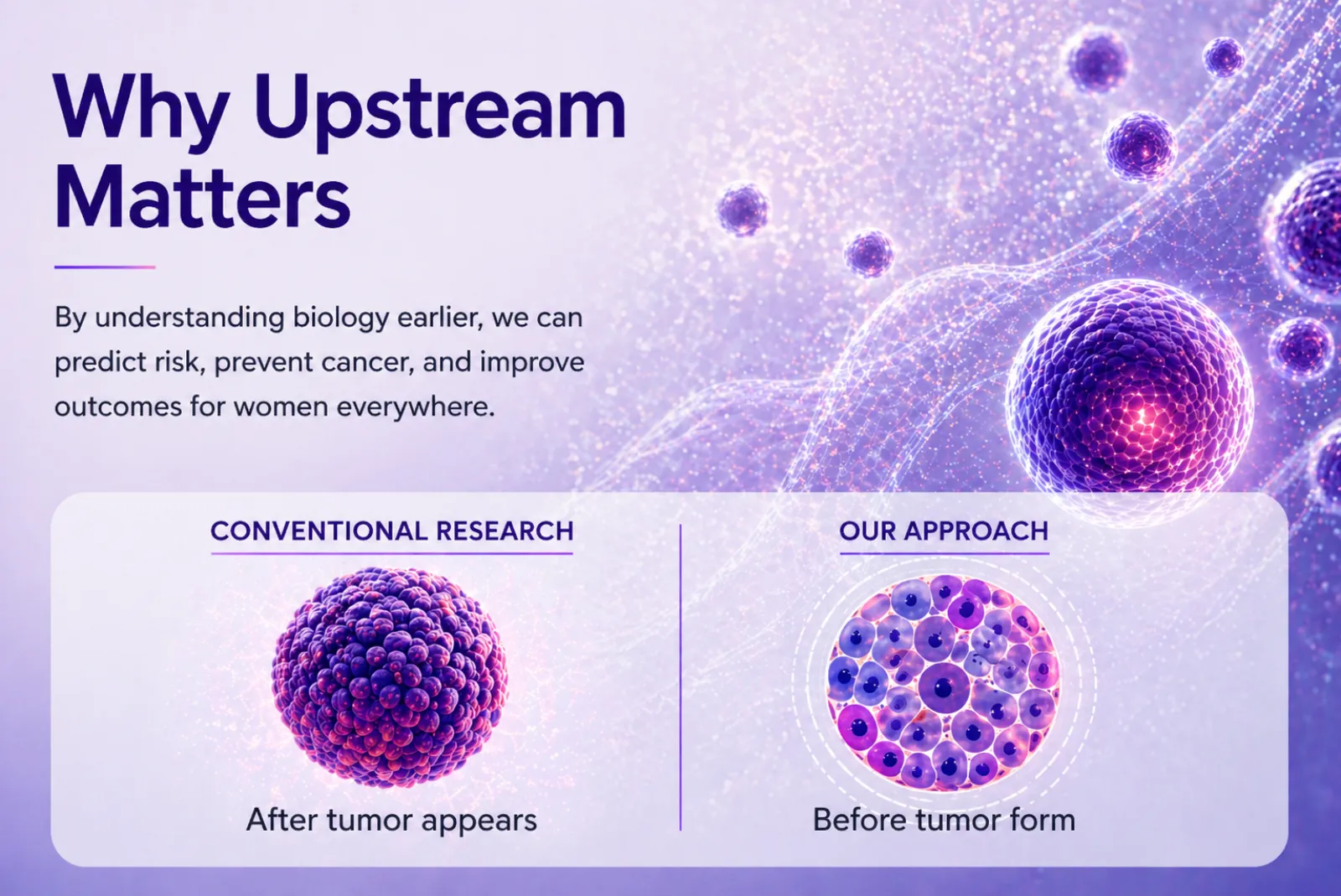
Our Innovative Programs
Three Integrated Programs.
One Upstream Strategy.
Together, these programs form a unified framework to understand, predict, and intercept breast cancer before tumors develop—not just diagnose it earlier.
Explore our programs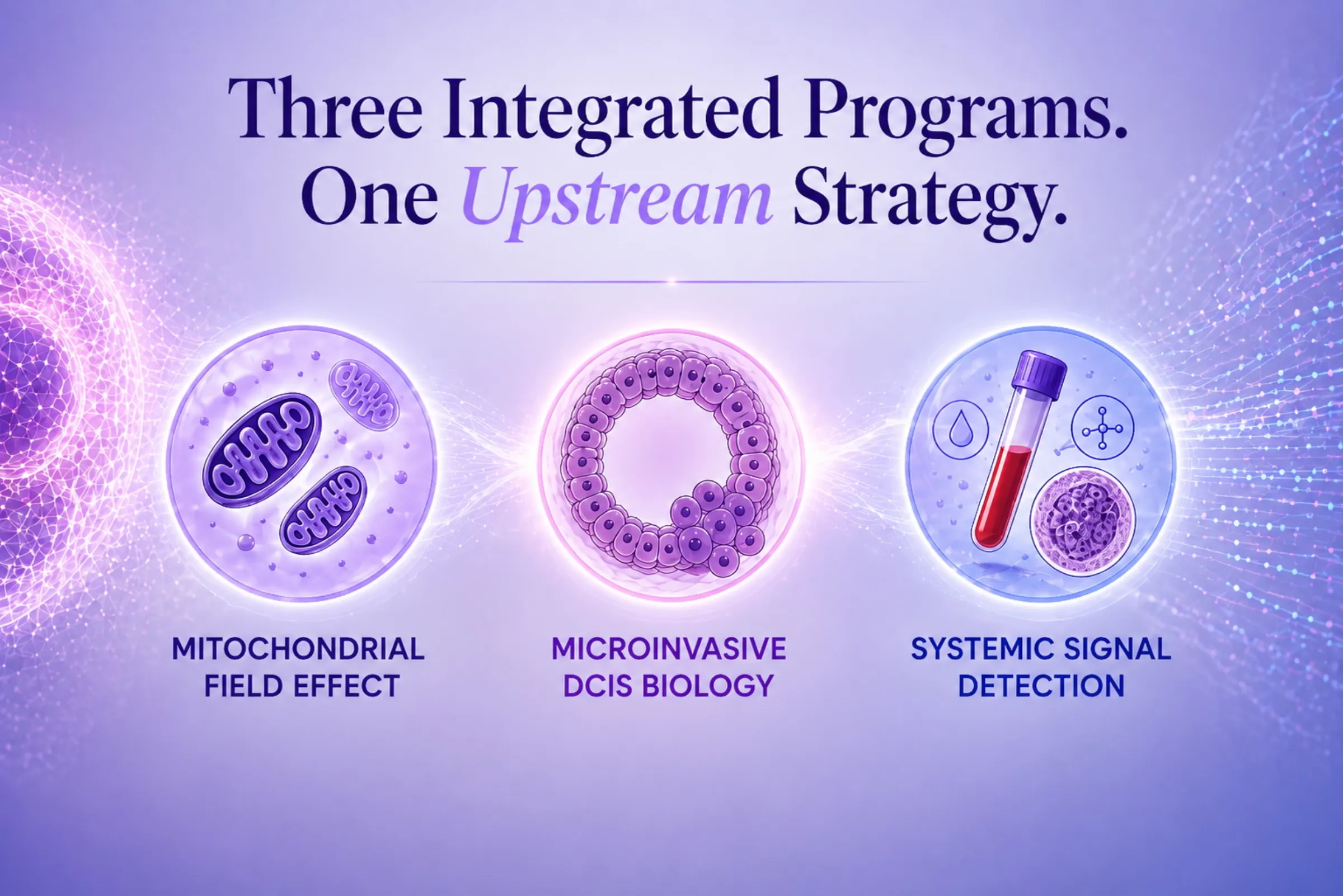
- Program 01
Mitochondrial Field Effect
Identifying early metabolic stress states in breast tissue that precede tumor formation in young women, enabling abnormal cell persistence and progression.
Read the program - Program 02
Microinvasive DCIS Biology
Defining early biological drivers of invasion in DCIS to identify which lesions progress—and enable precise interception, especially in young women.
Read the program - Program 03
Systemic Signal Detection
Detecting early risk biology through blood-based signals, independent of tumor stage, to enable earlier risk identification and intervention.
Read the program
Get involved