
Our Science
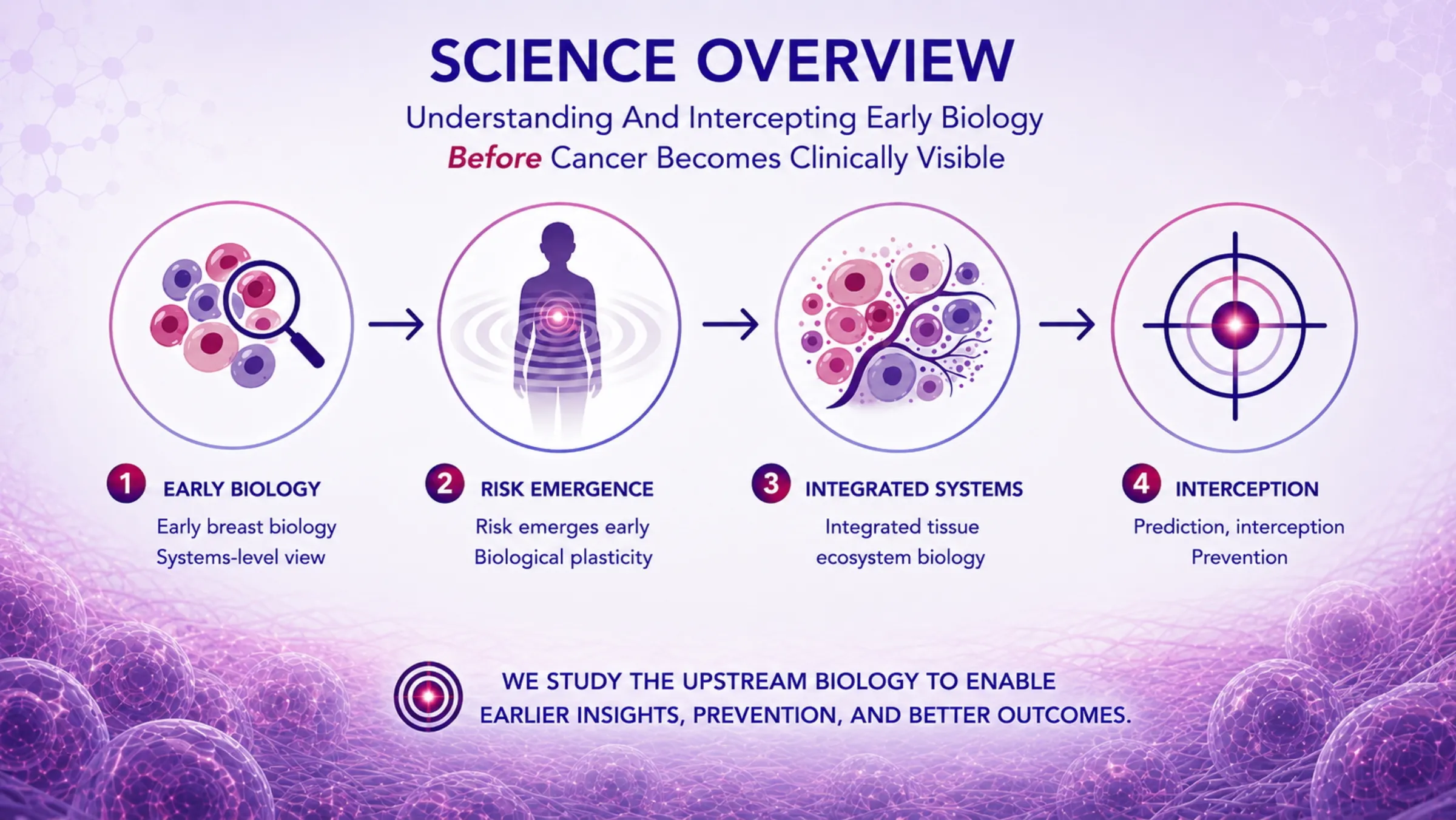
We focus on science before cancer is visible—at the stage when breast cancer risk in young women is being shaped, long before tumors form or classical oncogenic mutations accumulate.
We integrate early metabolic stress, mitochondrial biology, immune restraint failure, and adaptive reprogramming to study the earliest cellular stress, disease timing, and aggressiveness—when biological pathways may still be adaptable.
Scientific Philosophy
An Upstream, Human-focused Approach to Breast Cancer Research.
Instead of starting with established tumors, we study the earliest biological stages that precede or are proximal to tumor formation, when breast cancer risk is being established and potentially modifiable.
This approach reflects our belief that the greatest potential for prediction, prevention, and early intervention resides before disease shows symptoms.
Core Principles
Disease Emerges Within a Stressed, Permissive Ecosystem—Not from Mutations Alone.
Breast cancer in young women is likely to emerge within a stressed, permissive tissue ecosystem, where metabolic signaling integrates hormonal exposure, developmental timing, environmental influences, and genetic susceptibility. These system-level interactions precede tumor formation and influence whether abnormal cells are contained or allowed to progress.
Because early breast cancers are typically spontaneous and polygenic, our approach prioritizes studying epithelial, immune, stromal, and systemic biology together—recognizing that disease risk is shaped by interactions across tissues rather than by isolated molecular events.
Operationalized through three integrated programs
- Mitochondrial Field Effect — defining tissue-level metabolic stress states that precede tumor formation.
- Microinvasive DCIS Biology — understanding the transition from pre-invasive lesions to early invasion.
- Systemic Signal Detection — identifying circulating signals that enable non-invasive detection of early risk and disease.
A Distinct Approach
Grounded in Human Breast Biology—Not Late-Stage Models.
Most breast cancer research begins after tumors develop and primarily uses models designed for treatment rather than for prevention or recognizing the determinants that might help in early detection. In contrast, our approach is grounded in human breast biology and targets early risk stages, using human breast tissue and body fluids—rather than relying solely on late-stage disease data or animal models to infer early biology.
We prioritize time-aware, closed-ended, hypothesis-driven questions that can be answered decisively—whether early risk states exist, how they are maintained, and whether they can be detected systemically—so that prevention and early detection in young women can move toward biology-grounded interception.
By shifting research focus from cancer-stage and extrapolated models to breast biology directly relevant to young women, we advance from late-stage response to early prediction.
Our Vantage Point
We Move Breast Cancer Research Upstream
A new approach to early biology—focused on discovering and targeting the earliest drivers of disease.
We study the biological changes that occur before cancer is visible—when risk and disease trajectory are still being shaped, and when biology may still be reversible. In young women, early breast cancer is not defined by mutations alone, but by a stressed, permissive tissue environment shaped by metabolic strain, immune restraint failure, and disrupted cellular ecosystems.
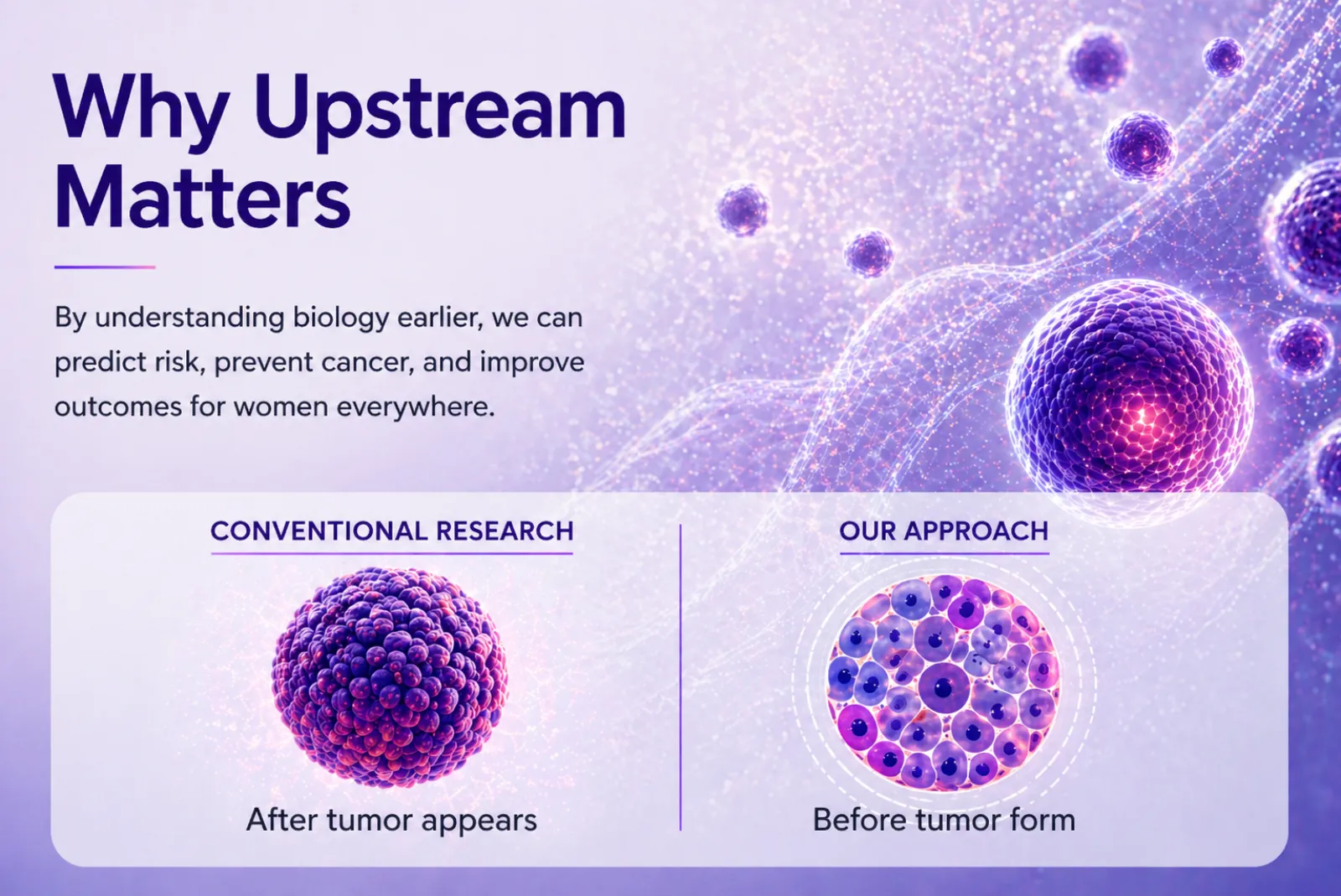
By shifting where and when research begins, we aim to unlock new paths for prediction, prevention, and early interception—at a stage where outcomes can still be fundamentally changed.
We examine the earliest changes that set disease in motion
- Before tumors form — identifying pre-tumor biological states.
- Across the tissue ecosystem — integrating epithelial, immune, and stromal biology.
- Near the point of transformation — capturing early signals for detection.
- Grounded in human biology — using tissues and biofluids to drive translational insight.
Our Science
Understanding Early Risk Biology
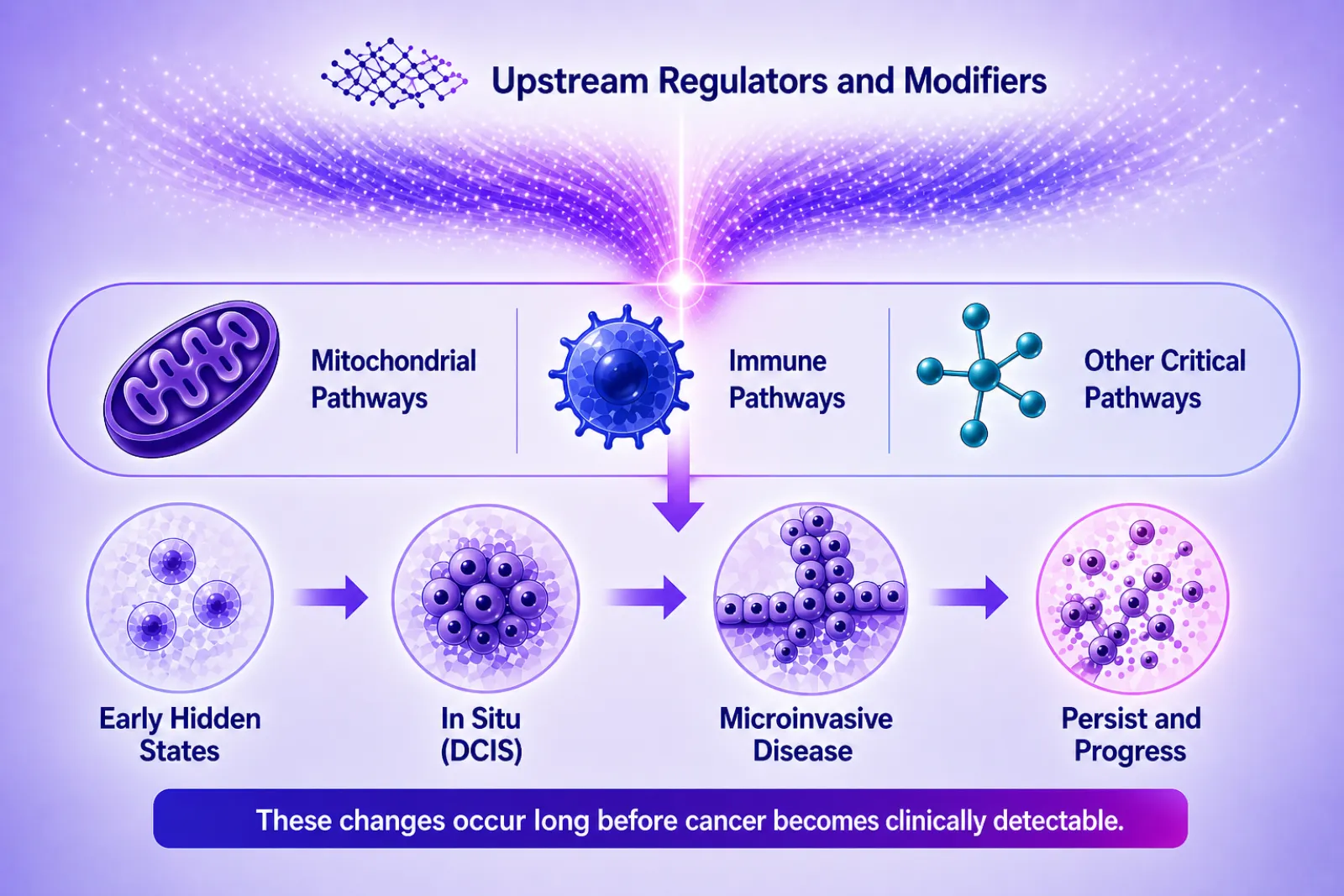
In young women, key factors—including hormonal cycling, stress, metabolism, inflammation, and environmental exposures—converge on mitochondrial, immune, and other critical pathways.
Persistent upstream biologic signals disrupt tissue regulation and weaken metabolic and immune restraints, enabling abnormal cells—from early hidden states to in situ and microinvasive disease—to persist and progress long before cancer becomes clinically detectable.
From Insight to Intervention
From Early Biology to Intercepting Risk & Early Detection
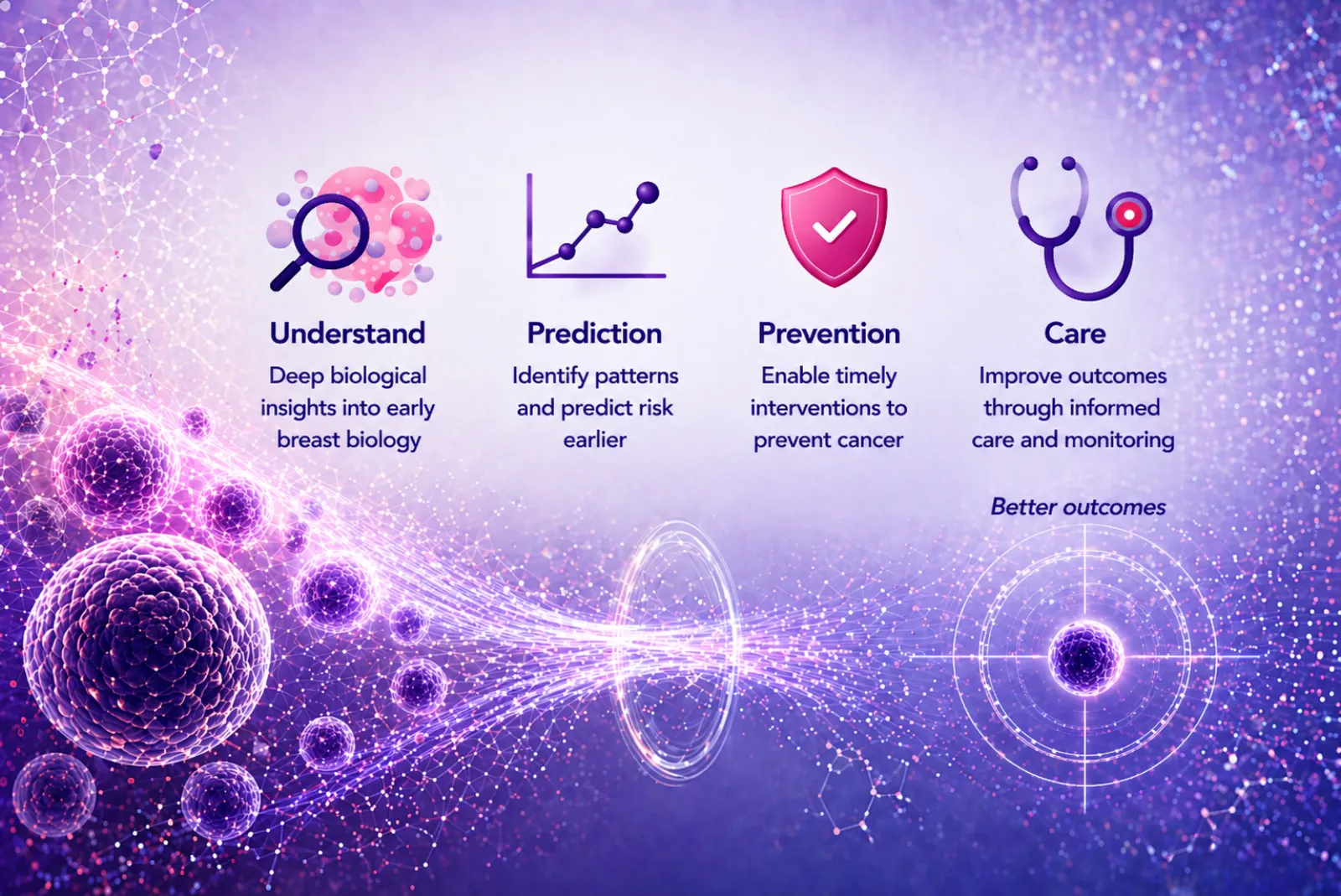
By defining early biological drivers, we aim to identify biologically grounded risk states and monitor how they evolve over time—enabling new approaches to early detection and creating opportunities for prevention and interception before aggressive disease takes hold.
Our goal is not only earlier diagnosis, but to alter the course of the disease before it becomes aggressive.
Get involved