
Our Innovative Programs
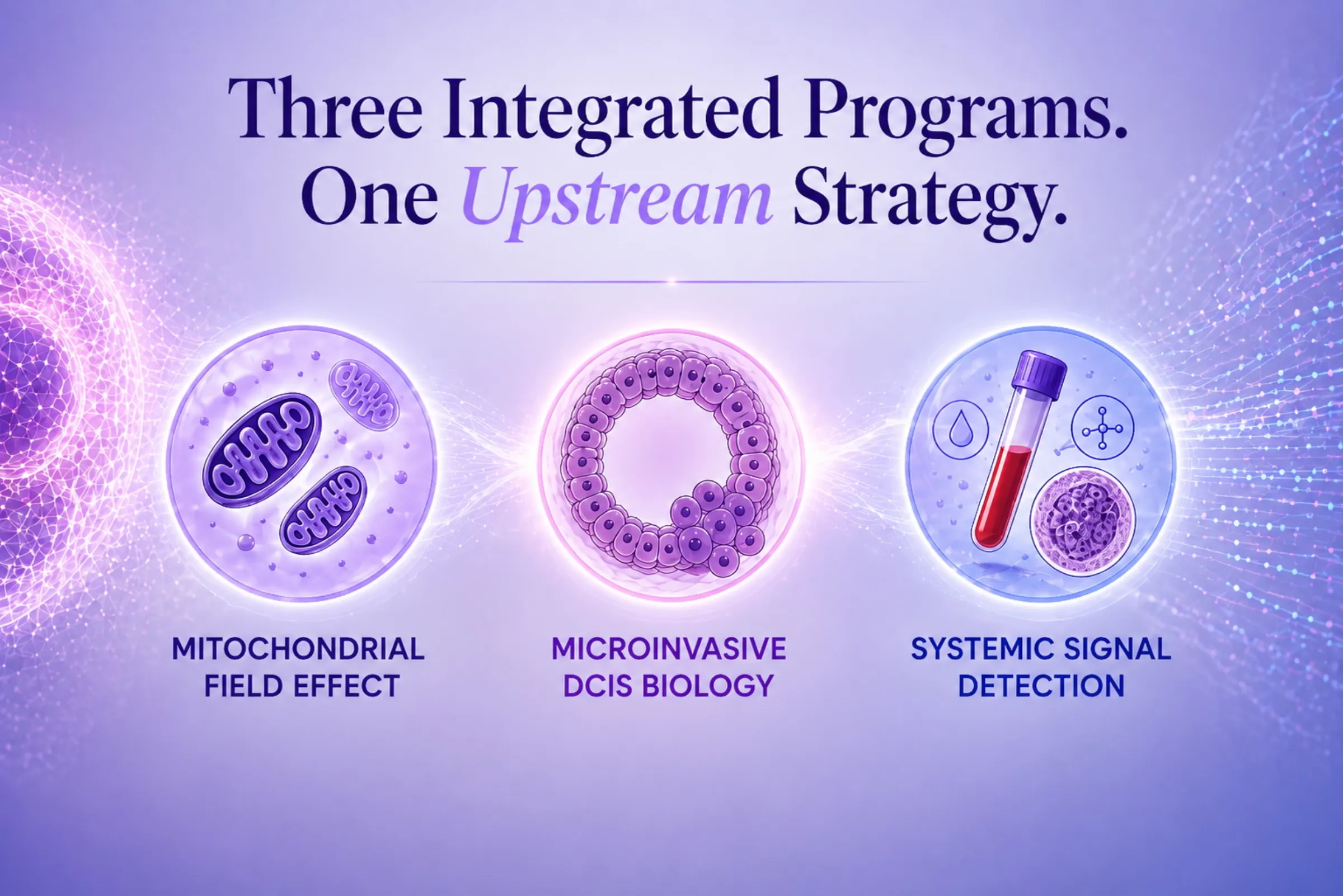
Three Integrated Programs.
One Upstream Strategy.
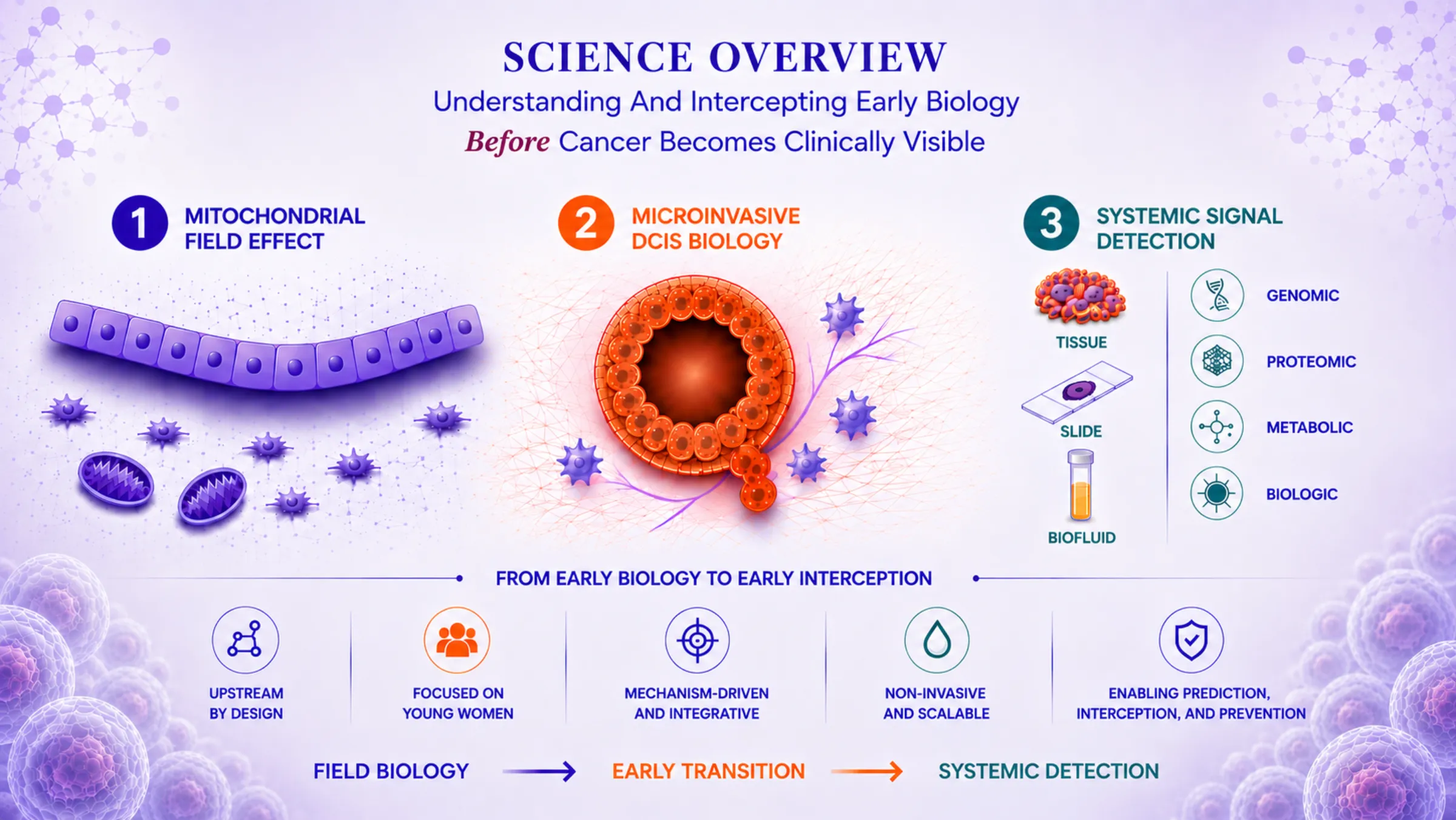
Breast cancer in young women likely begins as a measurable tissue state—long before any lesion forms. Early lesions reflect progression, not initiation, and systemic signals can reveal risk before lesions are detectable.
Our research is organized into three innovative programs that move from field biology → early transition → systemic detection—to enable prediction, interception, and prevention before disease becomes clinically apparent.
- Program 01
Mitochondrial Field Effect
Identifying early metabolic stress states in breast tissue that precede tumor formation in young women, enabling abnormal cell persistence and progression.
Read the program - Program 02
Microinvasive DCIS Biology
Defining early biological drivers of invasion in DCIS to identify which lesions progress—and enable precise interception, especially in young women.
Read the program - Program 03
Systemic Signal Detection
Detecting early risk biology through blood-based signals, independent of tumor stage, to enable earlier risk identification and intervention.
Read the program
The Biological Context
Breast Tissue in Young Women is in a State of Continuous Change.
Breast tissue in young women is shaped by hormonal cycling, metabolic stress, immune regulation, and transitions across reproductive stages—non-lactating, lactating, and recovery states. These vary widely yet are rarely studied together, leaving early, reversible risk factors underexplored.
Non-lactating young women’s breast tissue undergoes repeated cycles of hormonal fluctuations, growth, regression, and repair—none involve the extensive remodeling seen in pregnancy or lactation—yet they cause ongoing metabolic and mitochondrial stress on epithelial, immune, and stromal cells. Lactating young women represent a unique biological state marked by intense yet transient reproductive stress, tissue growth, involution, and immune changes.
Our approach shifts this paradigm upstream—studying breast cancer as an evolving tissue- and system-level condition, rather than a late-stage genetic event alone.
Get involved