
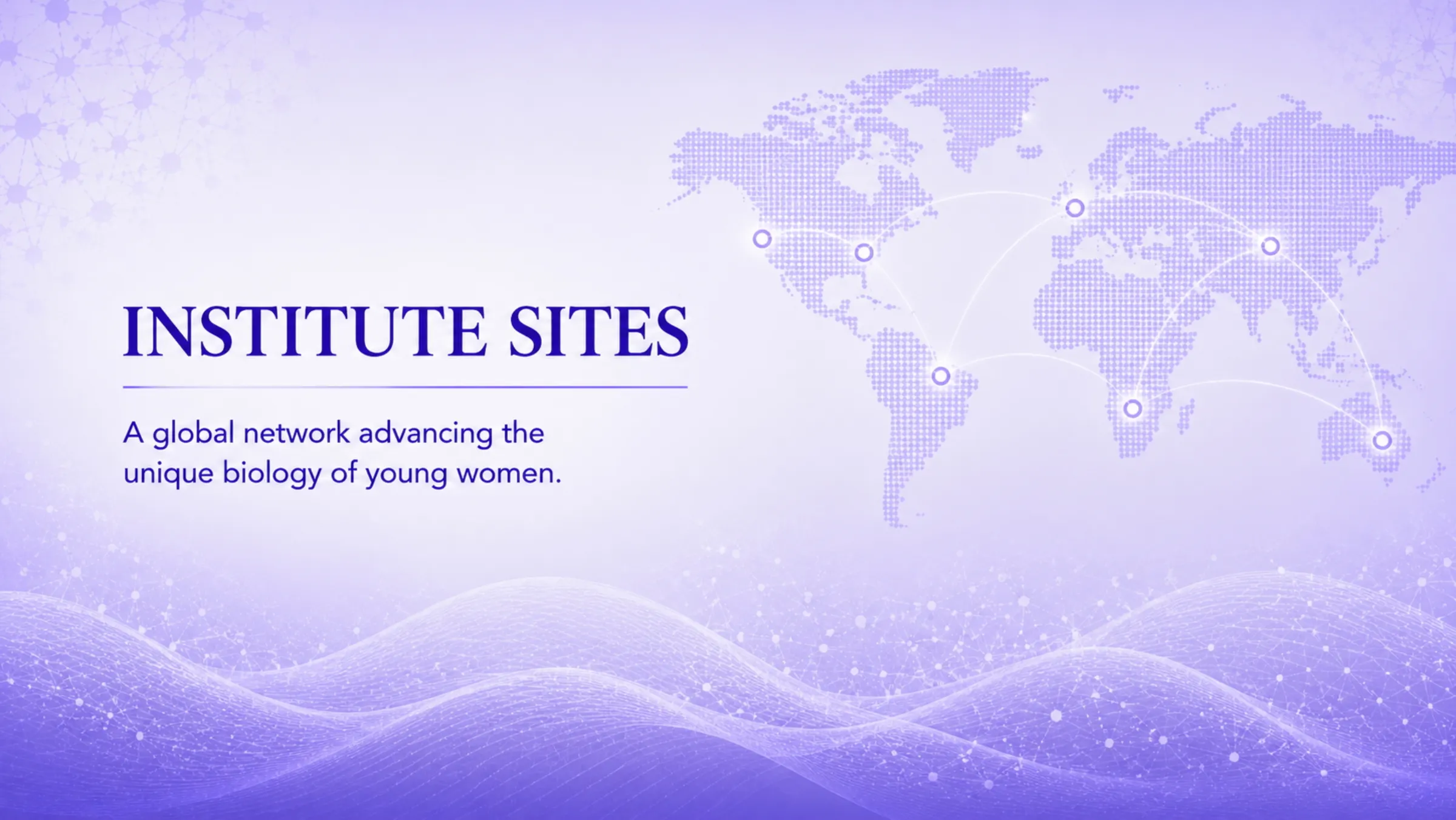
A Global Institute
A Coordinated, Human-centered Approach to Studying Early Breast Cancer Biology in Young Women.
In Phase 1, the YWBCRI functions as a virtual research institute that brings together investigators across regions and disciplines to focus on early disease stages, using standardized frameworks and drawing on tissue and body-fluid samples. The YWBCRI sites connect this research to real-world biology and patient populations—aligning collective efforts on fundamental questions that cannot be addressed alone.
Affiliated Hub Sites
Three Institute Sites. One Shared Framework.
Each site operates within a shared framework that directs how research is carried out, managed, and applied across the Institute—while remaining grounded in local clinical context and patient populations. Discussions with additional leading medical centers are ongoing.
- Site 01Edinburg, Texas, USA
YWBCRI–DHR Health
Director · Carlos García-Cantu, MD
A U.S. hub anchoring the Institute’s upstream research in a diverse patient population, integrating clinical care with early breast biology research.
Read more - Site 02Lisbon, Portugal
YWBCRI–FMUL
Director · Luis Costa, MD, PhD
A European hub at the Faculty of Medicine, University of Lisbon, advancing translational programs across early biology, DCIS transition, and systemic detection.
Read more - Site 03Tokyo, Japan
YWBCRI–KUHP
Director · Masakazu Toi, MD, PhD
An East Asian hub extending the Institute’s upstream research into Japanese patient populations, with deep expertise in tumor microenvironment biology and systemic treatment response.
Read more - Site 04
How the YWBCRI Sites Work
A Coordinated Research Ecosystem to Accelerate Discovery.
The YWBCRI Sites function as a coordinated research ecosystem to accelerate discovery in young women’s breast cancer. Together, they generate new biological insights, address critical knowledge gaps, uphold scientific rigor and feasibility, and maintain a strong focus on prevention, early detection, and early intervention.
Research Framework
Investigators across YWBCRI Sites collaborate within a shared upstream research framework that defines key biological questions, study design principles, and analytical standards. The coordinated use of breast tissue and body-fluid samples allows meaningful integration of results across sites.
Data and Biomaterial Sharing
Data and biospecimen sharing at each site is guided by local policies that prioritize responsible access, scientific rigor, and the protection of participant privacy—enabling collaborative discoveries that go beyond what any single institution could achieve, while respecting local stewardship and regulatory requirements.
Partnerships and Collaborations
Partnerships and Collaborations.
At the Young Women’s Breast Cancer Research Institute, collaboration is essential to advancing research on the early biology, risk factors, and detection methods of breast cancer in young women. YWBCRI partners with academic institutions, healthcare providers, nonprofits, and research entities to advance scientific discovery and translational research focused on early breast cancer biology, ultimately benefiting young women. The YWBCRI welcomes mission-aligned collaborations that advance knowledge, foster innovation, and improve outcomes for young women worldwide.
Get involved